
 Organizations using Clarity already know how powerful it is for making strategic decisions and ensuring work is delivered. It helps teams manage projects, resources, financials, and delivery with the structure and visibility leaders need to make strategic decisions The platform provides the foundation leaders need to manage work with discipline and visibility.
And yet, even with that foundation in place, a familiar problem often appears.
Important work gets delayed. Data becomes inconsistent. Reporting requires extra follow-up. And the information leaders rely on to make decisions becomes harder to trust.
Confidence in what the system reflects can weaken over time—not because the system is flawed, but because the day-to-day behaviors required to keep it accurate are not happening consistently.
That is the real gap.
Clarity tells you what is happening across your organization. What it does not control on its own is how consistently people engage with it. Whether users update their work on time. Whether they maintain accurate records. Whether they see value in doing so beyond meeting a requirement.
Those are not small details. They are the difference between a system that reflects reality and one that lags behind it. Without accurate data, it’s nearly impossible for leadership to make strategic decisions.
The challenge is not capability. It is behavior.
 For most users, Clarity is experienced through routine actions. Submitting a timesheet. Updating a status report. Entering or maintaining data that supports broader reporting. These actions are necessary for data-backed decision making, but they do not always feel meaningful to the people doing them. Over time, that disconnect creates friction. Users complete tasks because they have to, not because they see immediate value in doing them well. And when that happens, completion becomes inconsistent. Data quality begins to vary. PMOs and administrators end up spending more time chasing down information and cleaning it up than actually using it to move the business forward.
This is not a new problem, and it is not unique to Clarity. It reflects a broader trend in how people experience work.
Recent research reinforces the point. Gallup’s global workplace data shows that only 21% of the global workforce is engaged with their daily work.1 For unengaged employees, routine administrative tasks are often the first to slip— It is not that the work is unimportant, it is that it rarely feels motivating on an individual level.
That is why improving adoption is rarely solved by process alone.
Training, governance, and enforcement all play a role, but they do not fully address the underlying issue. If the experience of doing the work does not change, behavior tends to revert over time.
Making work visible changes how people engage
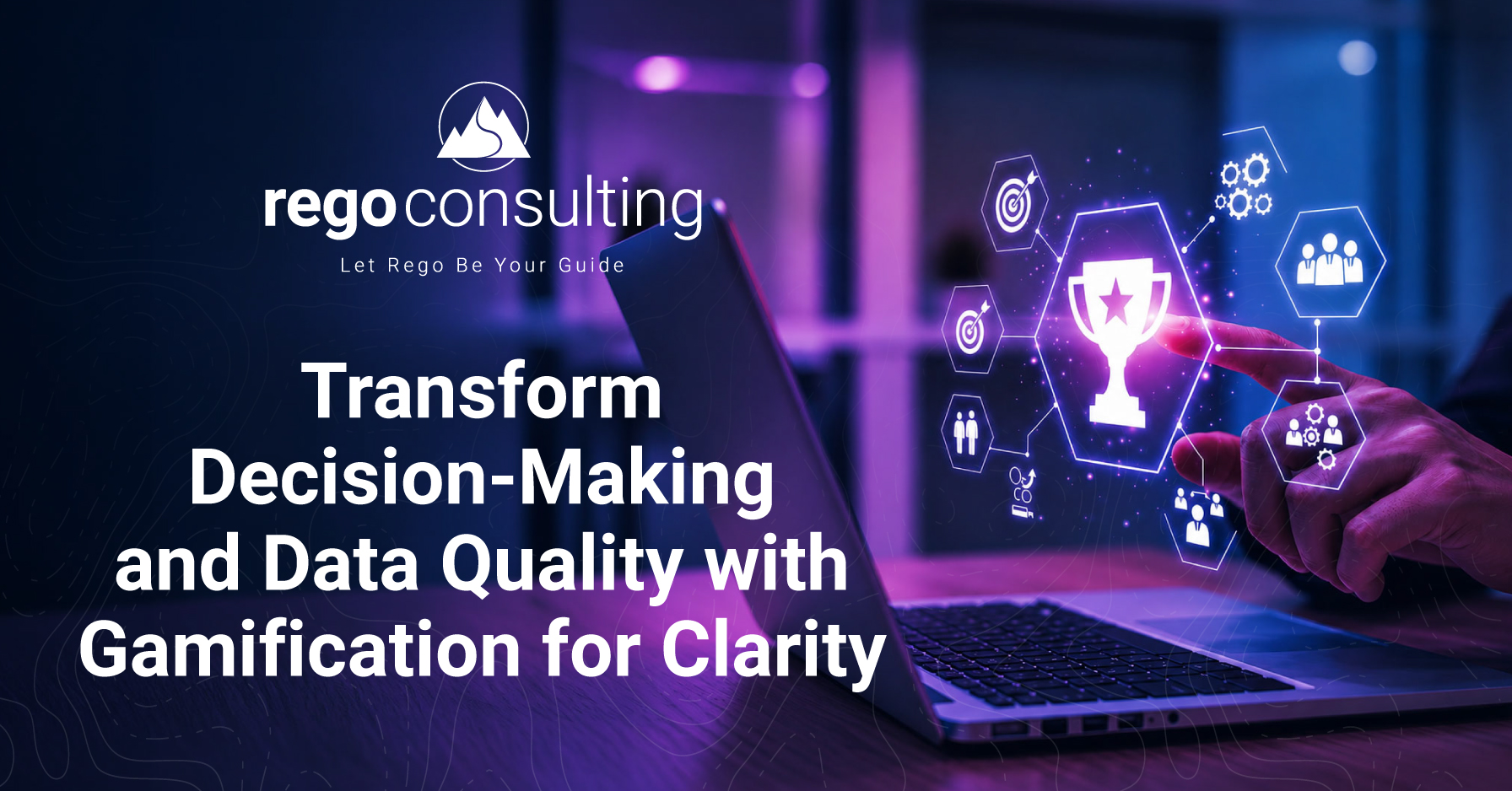
 This is where gamification offers a different approach.
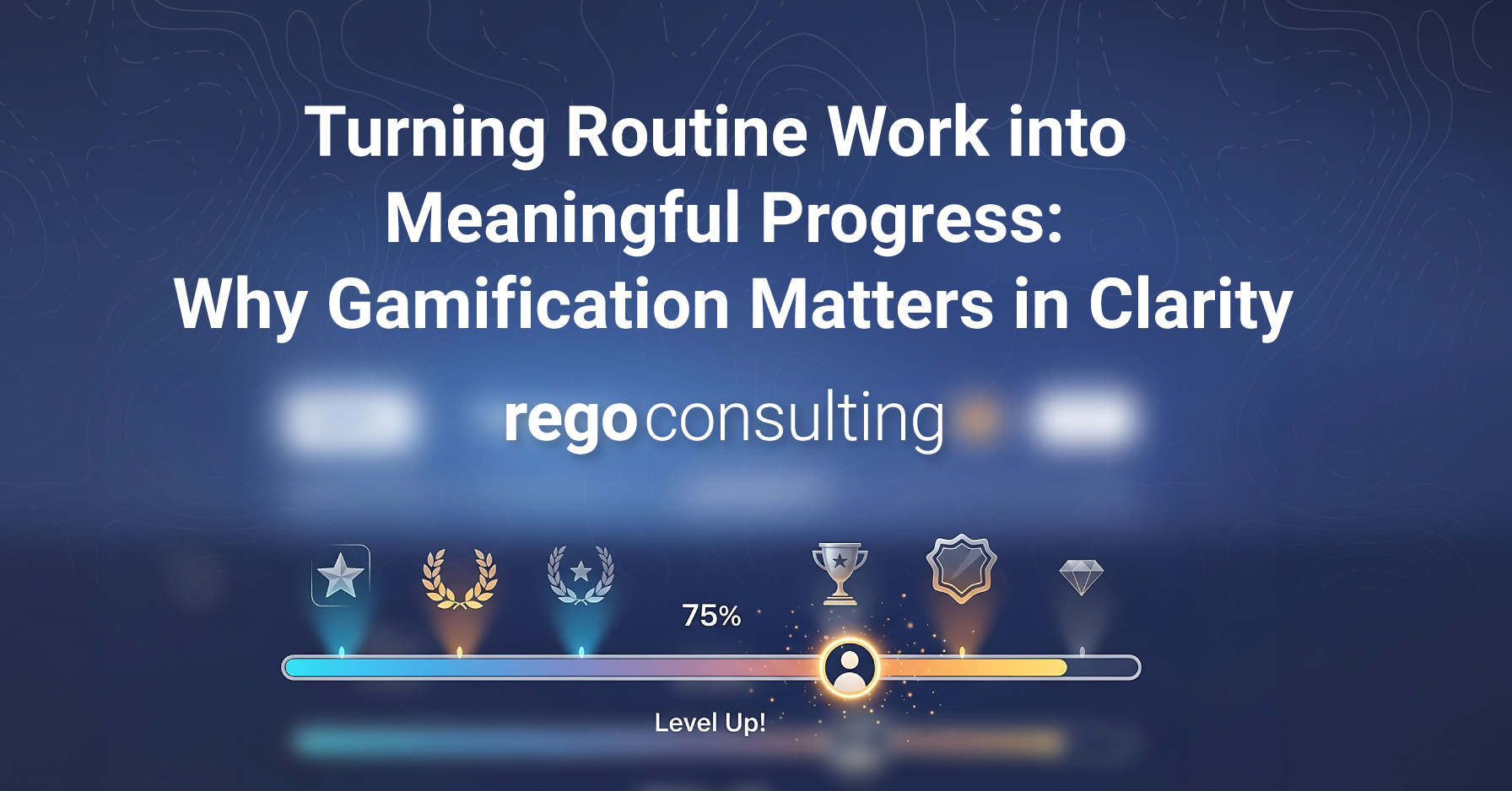
Instead of focusing only on compliance, it focuses on visibility and reinforcement. It connects individual actions to measurable progress and makes that progress visible to the user in real time.
At a practical level, gamification captures user activity, translates it into metrics, and reflects it back through recognition, progress, and feedback.
That may sound like a subtle shift, but it matters. When people can see their actions are visible, they feel more meaningful. When progress is visible, people are more likely to continue. Over time, this changes how routine work is experinced.
Submitting a timesheet is no longer just a requirement. It becomes part of a rewarded pattern. Updating a task is no longer an isolated action. It contributes to a visible sense of momentum.
That is how behavior starts to change—not through enforcement, but through reinforcement.
From isolated actions to consistent habits
One of the limitations of traditional systems is that they treat actions as isolated events. A task is completed. A form is submitted. A record is updated. Each action exists on its own.
In reality, performance is driven by consistency over time. Habits matter more than individual actions.
Gamification reframes routine work in that context. It connects actions together, allowing users to see patterns rather than just isolated events. Over time, this reinforces consistency, which is exactly what organizations need to improve data quality and reliability.
The effect is cumulative. Small improvements in consistency lead to meaningful improvements in reporting. Reporting improves decision-making. Decision-making improves outcomes.
But it starts with behavior.
Recognition is not a “nice to have”
 Another gap in many Clarity environments is doing the right things consistently often goes unnoticed. Users who complete their work accurately and on time often receive little feedback beyond the absence of escalation. They only hear from leadership if they are doing something wrong.
That makes it hard to reinforce positive behavior.
Gamification introduces structured recognition tied directly to measurable actions. Because it is grounded in captured activity and clearly defined criteria, recognition remains consistent and transparent. It reflects what users actually do, rather than subjective perception.
This matters because recognition influences motivation. McKinsey Research shows that clear goals and visible progress significantly improve performance and engagement.2 When effort is visible, it is more likely to be repeated. When progress is acknowledged, it becomes easier to sustain.
Improving data quality without adding friction
From a leadership perspective, the value of gamification is not theoretical. It is practical and measurable.
When users engage more consistently with Clarity, the quality of the data improves. Updates happen on time. Records are more complete. Reporting becomes more reliable. It becomes easier to make data-backed decisions.
This happens without adding additional tools or processes. Gamification works within the existing Clarity experience, reinforcing the behaviors that already matter rather than adding new ones.
That distinction matters. The goal is not to create more work. It is to make existing work more effective.
A native extension, not a separate system
One of the reasons this approach works is because it is embedded directly within Clarity. It does not require users to adopt a new platform or change how they access the system.
Instead, it enhances the experience they already have.
That lowers friction in a meaningful way. Users do not need to manage another tool. The behavioral feedback loop becomes part of the natural flow of work.
For organizations, that means adoption is improved without increasing complexity.
A foundation for better decisions
 At a broader level, gamification strengthens the overall value of Clarity.
Clarity provides a structured, operational view of work. It shows timelines, financials, risks, and progress. But that view is only as reliable as the data behind it.
Gamification helps improve the consistency of that data by influencing the behaviors that produce it.
Together, they provide a more complete picture. One reflects what is happening. The other helps ensure that what is happening is captured accurately and consistently.
That combination leads to better decisions.
Final thought
Organizations don’t always struggle because they lack systems or processes. More often, they struggle because the behaviors needed to make those systems effective are difficult to sustain over time. That is a much harder problem to solve.
Gamification addresses that challenge by changing how work is experienced. It makes progress visible. It makes effort recognizable. And it connects routine actions to something more immediate and meaningful. It connects routine actions to something more meaningful.
It does not replace governance or process. It strengthens them.
And in doing so, it helps organizations move closer to something they are all aiming for—a clearer, more reliable understanding of the work they depend on to make decisions.
If you want to dive deep into Rego’s Gamification for Clarity features and see it in action, contact us today.

References
- Gallup. (2025). State of the global workplace: 2025 report. https://www.gallup.com/workplace/697904/state-of-the-global-workplace-global-data.aspx
- McKinsey & Company. (2024). What employees say matters most to motivate performance. https://www.mckinsey.com/capabilities/people-and-organizational-performance/our-insights/what-employees-say-matters-most-to-motivate-performance
About the Author: Rego Consulting