
Even the right change can lose momentum when the people expected to carry it forward are not prepared. In this article, you’ll learn when organizational change management (OCM) is needed and how planning, communication, and employee engagement can help people understand, adopt, and sustain change.

What Is Organizational Change Management (OCM)?
Change is inevitable. It asks people to work, think, or behave differently. In the workplace, change may affect people’s responsibilities, tools, expectations, or day-to-day experience.
Organizational change management helps employees, contractors, and other stakeholders understand, prepare for, and adapt to those changes. This structured approach brings focus to the people side of change so new ways of working can take hold.

When Is Organizational Change Management Needed?
Simple rule: If it affects people, the change needs to be managed.
Here are a few examples:

Why Is Organizational Change Management Important?
OCM helps organizations move from introducing a change to realizing its intended value. By aligning leaders, addressing resistance early, and reinforcing new behaviors, it can protect productivity, maintain momentum, and support lasting results.

Mismanaged change can increase the risks of the following:
New Coke: A Lesson in Understanding Stakeholders
New Coke fizzled. In 1985, Coca-Cola replaced its original formula with New Coke. Although taste tests favored the new formula, the research did not capture consumers’ love of the original product. After widespread protests, the company brought back Coca-Cola classic just 79 days later. This example illustrates why leaders must understand stakeholder attitudes, not just technical or performance data, before introducing a major change.
Image source: The
Coca-Cola Company.
Organizational Change Management Framework
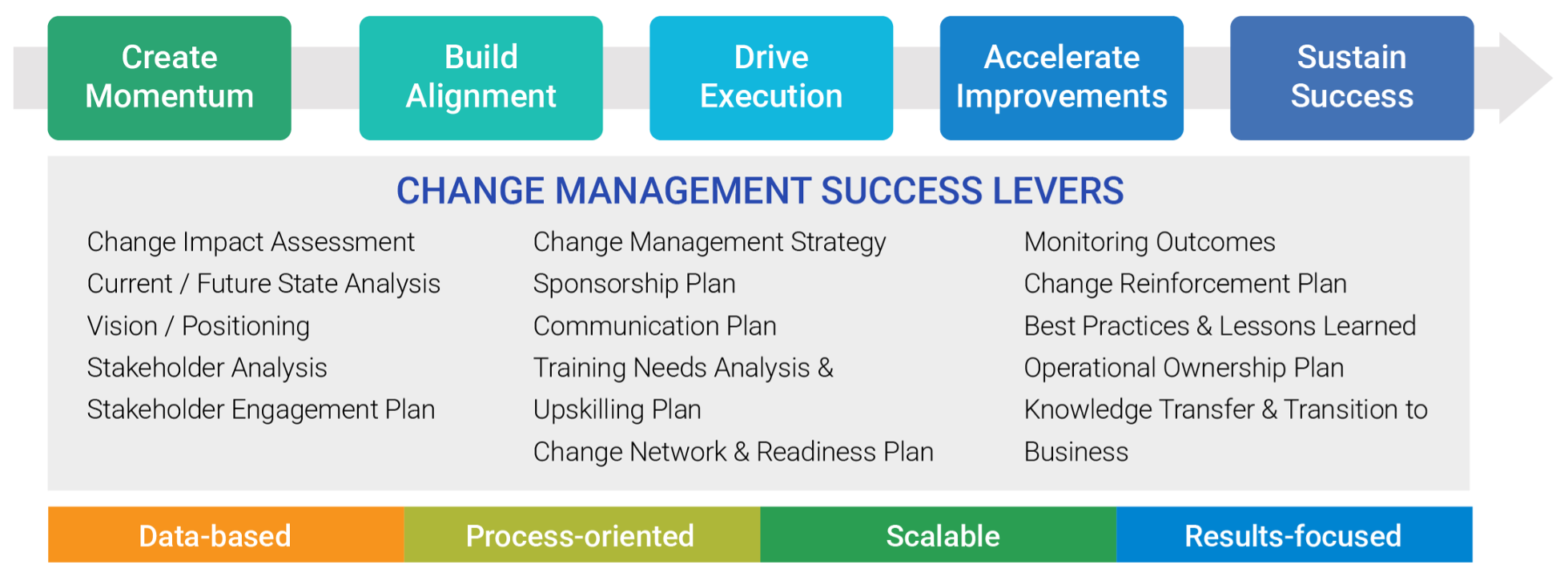
Effective OCM begins with a clear plan for leadership alignment, stakeholder engagement, communication, training, and reinforcement.

Core Building Blocks for Managing Change
Key building blocks include:
- Understand the change and its purpose – have a clear vision statement
- Assign roles and identify stakeholders. You will need a change manager, and possibly several team members as part of the change team. Also identify:
- A steering committee
- Change Champions
- Impacted employees
- Communications and Human Resources (HR) team members
- Finance representatives
- Understand the project timeline and allow time for training and buy-in
- Define success metrics
- Build a Reinforcement Plan to sustain the change – remember change continues well after “go-live”

Change Management Communication: What Employees Need to Know
Change becomes unsettling when employees are left wondering: Why is this happening, and what does it mean for me? Clear and consistent communication helps people understand the purpose of the change, what to expect, and where to find support.
Key questions to answer when communicating:
- Why is this change needed?
- What are the risks of not changing?
- What will change, and what new behaviors will be expected?
- Who will be affected?
- When and where will the change occur?
- How and when will updates be communicated?
- Who can employees go to with questions?
- What will work look like after the change?
- How may the change benefit employees?

What’s In It For Me (WIIFM) in Change Management?
Addressing this question for each affected audience can reduce uncertainty and help employees understand how the change relates to their work.
For example, when employees are moving to a new department, potential benefits might include:

Employee Engagement in Change Management
Meaningful employee involvement can strengthen understanding, surface practical concerns, and build greater ownership of the change.
- Decision-making and voting
- Feedback (discussions and surveys)
- Communication
- Intranet and news updates
- Input into tool development and new ways of working
Employee Engagement Scenario: Involving People in a Rebrand
During a rebrand, employees might weigh in on messaging and naming, test proposed concepts, help update assets, and support communication with customers.
The practical lesson is to give employees meaningful contributions they can complete and show how those contributions influenced the outcome. This allows employees to feel involved in the change process and builds “buy-in” from those needing to change.

Put People at the Center of Your Clarity or Apptio Initiative
Whether you are implementing, modernizing, or expanding Clarity or Apptio, Rego Consulting brings platform and organizational change management expertise together. Our experts help align leaders, engage affected employees, and develop communication, training, and reinforcement to support adoption.

About the Author: Jennifer Mitchell